Is Caesar Salad Healthy? Nutrition, Drawbacks, and Smarter Choices
 h2>The short answer: Is Caesar salad healthy?
Caesar salad can fit into a balanced eating pattern, but the word “salad” does not automatically determine its nutritional profile. A dish labeled as a salad can range from a light vegetable side to a calorie-dense entrée, depending entirely on portion size and ingredient choices. The practical health assessment of a Caesar salad relies on specific variables: the amount and type of dressing, the quantity of cheese and croutons, the variety of vegetables, and the inclusion of protein.
To evaluate whether a Caesar salad aligns with personal nutritional goals, it helps to look beyond the name and examine the components that drive its overall balance. Key criteria include vegetable diversity, protein content, fiber levels, sodium, saturated fat, and total serving size. A small side salad with modest dressing may offer a refreshing, low-calorie option, while a restaurant-style entrée loaded with creamy dressing, extra cheese, and fried croutons can deliver a significant amount of sodium and saturated fat. There is no single universal verdict; instead, the healthiness of the dish depends on how these elements are combined and served.
What is in a traditional Caesar salad?
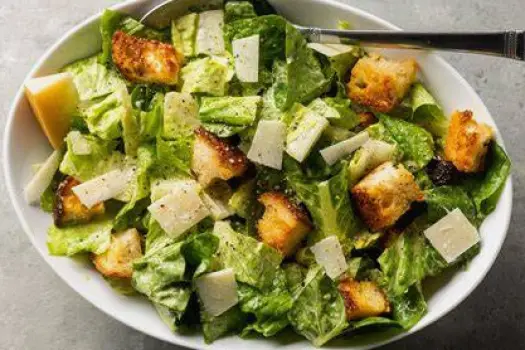
A traditional Caesar salad typically consists of romaine lettuce, croutons, Parmesan cheese, and an emulsified savory dressing. The dressing is the defining component, historically made by emulsifying oil with egg yolk, lemon juice, mustard, garlic, and anchovy or Worcestershire-style flavoring. This combination creates a rich, tangy coating that clings to the crisp lettuce leaves.

While these ingredients form the classic template, recipes and commercial products vary significantly. Not every Caesar dressing contains raw egg or anchovy, and many modern interpretations omit or substitute traditional elements to suit different dietary preferences or safety standards. The history of the dish is brief, but its nutritional evaluation depends on the specific ingredients used rather than its origin.
Understanding Caesar Salad Nutrition & Safety
Caesar salad nutrition: What changes the numbers?
A single calorie or nutrient figure cannot accurately represent all Caesar salads. The nutritional profile varies widely between homemade versions, packaged salad kits, small side salads, and large restaurant entrées. To compare different Caesar salads or dressings, you must look beyond the product name and examine the nutrition information relative to the amount actually consumed.
On a US Nutrition Facts label, nutrient quantities apply to the stated serving size. If you consume more than one serving, the listed calories and nutrients must be scaled accordingly. The label can therefore support comparisons between Caesar dressings or salad kits only after serving sizes are checked. This is critical because a “light” dressing may still result in high calorie intake if the serving size is large or if multiple servings are added to the salad.
When reviewing sodium and saturated fat on US labels, it is helpful to reference the FDA Daily Values, which are 2,300 mg for sodium and 20 g for saturated fat based on a 2,000-calorie reference diet. The FDA describes both as nutrients to consume below the Daily Value. These are label-reference values, not individualized prescriptions, but they provide a standard benchmark for assessing nutrient density. A Caesar salad that consumes a significant portion of these values in one meal may leave less room for other foods later in the day.
Distinguish between a small side salad and a large entrée. A side salad might contain a modest portion of dressing and a few croutons, resulting in a lower overall calorie and sodium count. An entrée version often includes larger portions of all components, along with added protein like chicken, which increases the total nutrient load. Comparing the stated serving size and servings consumed, then examining sodium, saturated fat, fiber, and protein on available nutrition information, provides a more accurate picture than relying on general assumptions.
Benefits and nutritional limitations
A Caesar salad based on romaine lettuce offers the benefits of a vegetable dish, providing hydration, fiber, and essential nutrients. The option to add varied vegetables can further enhance its nutritional value, introducing additional vitamins and minerals. The traditional recipe often features limited vegetable variety, relying primarily on romaine. This can be a nutritional limitation if the goal is to maximize vegetable diversity and fiber intake.
Additions determine whether a Caesar salad functions better as a side or a more complete meal. Adding a protein food, such as grilled chicken, tofu, or beans, can transform a light side into a satisfying meal that supports satiety and muscle maintenance. According to USDA MyPlate meal-planning material, including the five food groups where practical, making half the plate fruits and vegetables, making half of grains whole grains, varying protein foods, and limiting sodium and saturated fat are useful general meal-building principles. Applying these as general guidelines rather than a test that every Caesar salad must satisfy by itself helps in evaluating its role in a broader diet.
While adding protein and vegetables enhances the meal's completeness, it is important to balance these benefits against the traditional recipe's limitations. The high sodium and saturated fat content in some dressings and cheeses can offset the benefits of the added nutrients. The nutritional value of a Caesar salad depends on how well it aligns with these broader meal-planning principles rather than on any single ingredient.
Is Caesar dressing healthy?
Caesar dressing is a condiment whose recipe and serving amount matter more than any general label of “healthy” or “unhealthy.” The dressing is where most of the calories, saturated fat, and sodium in a Caesar salad are concentrated. Ingredients like oil, egg, cheese, anchovy, and salt influence energy density, flavor, and texture, but they also significantly impact the nutritional profile.
Formulations labeled “light,” fat-free, vegan, or yogurt-based are not automatically healthier. These products may have different ingredient profiles, but they can still contain high levels of sodium, added sugars, or other nutrients that need to be monitored. Comparing the actual ingredients, serving size, and nutrition label is essential for making an informed choice. A “light” dressing might have fewer calories per tablespoon, but if the recommended serving size is larger or if people tend to pour more, the total intake could be similar to the original version.
For those concerned about food safety, particularly when making dressing at home, the egg content is a key consideration. Fresh shell eggs can contain Salmonella. For foods served with raw or undercooked egg, specifically including Caesar salad dressing, FDA advises using pasteurized shell eggs or pastasteurized egg products. This distinction is important for homemade versions, as commercial dressings often use pasteurized eggs or different preservation methods to ensure safety.
When evaluating dressing, use label reading and nutrition facts to guide product comparisons. The FDA Daily Values for sodium and saturated fat provide context for assessing nutrient density, but they are reference values, not personalized targets. The healthiness of Caesar dressing depends on how much is used and how it fits into the overall meal composition.
How to make a healthier Caesar salad
Making a Caesar salad healthier involves flexible improvements that add useful foods rather than merely reducing calories. This approach helps maintain flavor and satisfaction while enhancing the nutritional profile. One effective strategy is to increase the amount of romaine lettuce and add other vegetables, such as cherry tomatoes, cucumbers, or bell peppers. This increases vegetable variety and fiber content without significantly adding calories.

Choosing an appropriate amount of dressing is another critical step. Instead of drowning the salad in dressing, start with a small amount and add more as needed. Using a spoon or drizzling from a height can help control portion size. When selecting a dressing, compare the serving size and nutrition label to find options that align with your nutritional goals, rather than relying solely on marketing terms like “light” or “low-fat.”
For the croutons, consider choosing whole-grain options or making them at home to control the ingredients and sodium content. Alternatively, you can substitute croutons with other textured toppings like nuts or seeds, which provide healthy fats and additional nutrients. If you are making the salad a meal, adding a protein food such as grilled chicken, tofu, or beans can enhance satiety and balance. According to USDA MyPlate, varying protein foods and limiting sodium and saturated fat are useful general meal-building principles.
Be mindful of cheese. Parmesan adds flavor and calcium but can be high in sodium and saturated fat. Using a smaller amount of high-quality Parmesan or substituting with a strong-flavored cheese can help reduce intake while maintaining taste. The goal is to create a balanced meal that includes vegetables, protein, and healthy fats, while managing sodium and saturated fat through careful ingredient choices and portion control.
Food-safety and allergen considerations
Food safety and allergen awareness are important aspects of enjoying Caesar salad, especially when making it at home or ordering from restaurants. For homemade dressing served with raw or undercooked egg, FDA advice recommends using pasteurized shell eggs or pasteurized egg products to reduce the risk of Salmonella infection. Children, older adults, pregnant people, and people with weakened immune systems have a greater risk of severe illness from Salmonella, making this precaution particularly important for these groups.
Allergen considerations are also crucial because common Caesar components may involve US major allergens. Milk, egg, fish, and wheat are among the nine major food allergens recognized under US law. Traditional Caesar ingredients may supply these through Parmesan (milk), egg-containing dressing (egg), anchovy (fish), and croutons (wheat). The actual ingredient and allergen declaration must be checked because formulations vary significantly. Commercial dressings and salad kits may use different ingredients, and substitutions can introduce other allergens.
Because recipes and commercial products vary, it is essential to check the ingredients on the specific recipe, menu information, or package rather than assuming a standard composition. This applies to both homemade and store-bought options. Being aware of these potential allergens and following food safety guidelines ensures that Caesar salad can be enjoyed safely and comfortably by a wider range of people.
A Caesar salad can fit into a balanced diet, but its nutritional value depends entirely on portion size and ingredient choices rather than the name alone. Traditional versions are often high in sodium and saturated fat due to the rich dressing and cheese, and they typically lack vegetable diversity. A small side salad with modest dressing differs significantly from a large restaurant entrée loaded with extra cheese and croutons.
To make a Caesar salad a more complete and nutritious meal, you can increase the vegetable variety, add a lean protein, control the amount of dressing, and substitute traditional croutons with whole-grain options or seeds. When preparing the dressing at home, it is important to use pasteurized eggs to reduce the risk of Salmonella, particularly for children, older adults, and those with weakened immune systems. Because commercial and restaurant recipes vary widely, always check ingredient labels for common allergens like milk, egg, fish, and wheat, and review nutrition facts for actual serving sizes of sodium and saturated fat.
Publishing organization: Harvard T.H. Chan School of Public Health
Publishing organization: U.S. Food and Drug Administration
Questions and comments
Please do not include passwords, medical record numbers, insurance information, financial information, precise addresses, or other confidential or directly identifying information in your message.